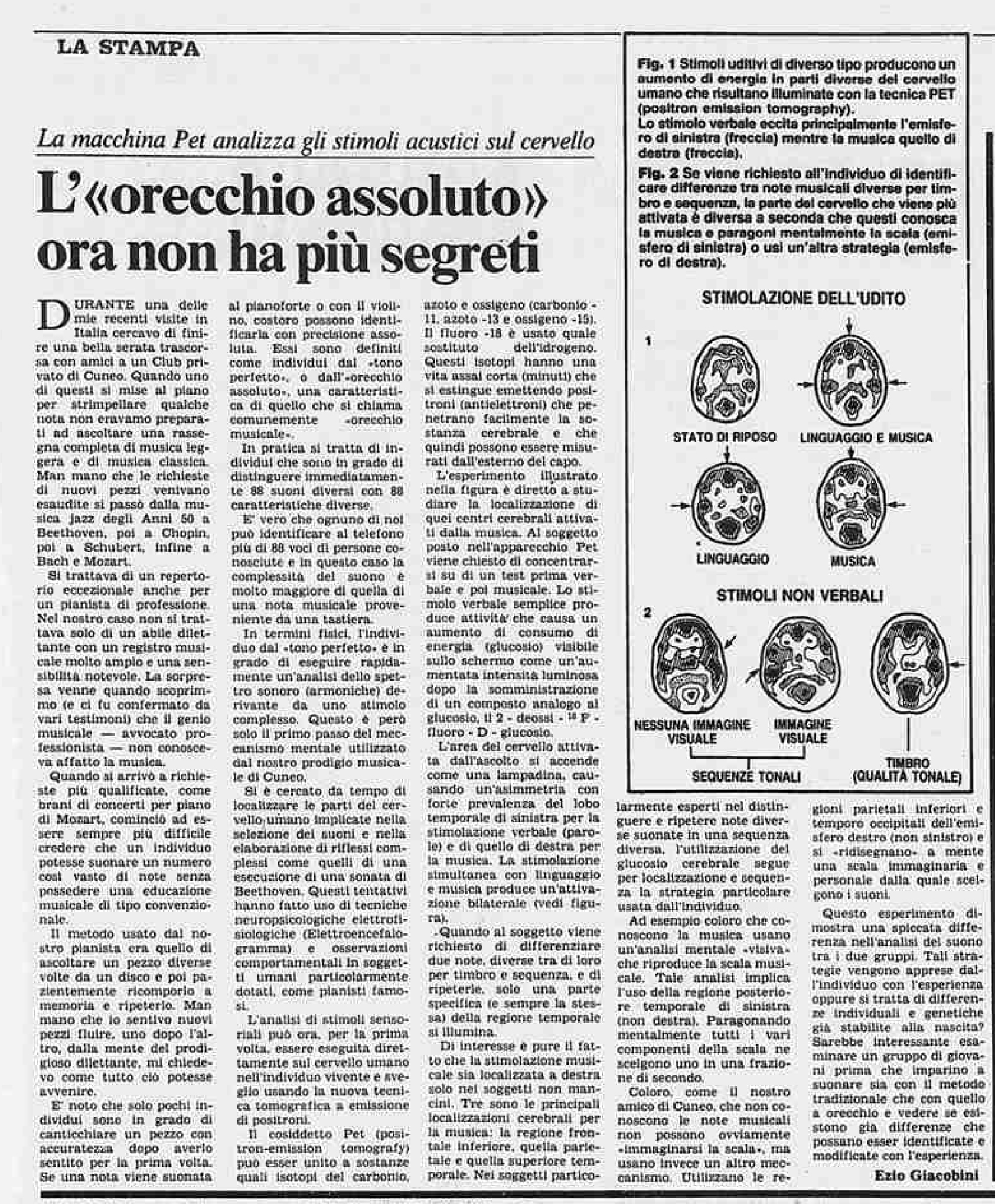
Avevo 24 mesi quando mio padre si accorse che avevo l’orecchio assoluto. Suonavo una piccolissima fisarmonica di 25 tasti e 12 bassi ad orecchio ma non sapevo il nome delle note: la nota SOL per me era il dito 5, il mignolo, il Re il n.2, il FA il n.4 e così via. Subito dopo aggiunsi il LA e il SI e al volo qualsiasi tipo di accordo. Quando mi si chiede come si può fare a riconoscere le note io non so rispondere. Le persone che non fanno musica non riescono a capire e io passo per un borioso. Invece chi è del mestiere dovrebbe capire anche se… più di una volta amici e conoscenti musicisti hanno provato a riconoscere una nota senza riferimento (di un’altra) ma non sono riusciti dicendo ad esempio un FA invece del MI oppure un RE, ma hanno detto: “ci siamo andati vicino” invece erano molto lontani perché se percepisci una nota le riconosci tutte per forza ed è impossibile sbagliare. Gli accordi sono un’altra cosa. Bisogna studiare l’armonia o/e avere esperienza sullo strumento. Non ho mai usato la parola “indovinare una nota” ma “riconoscere una nota” anche perché le note… “parlano”!!! Fate bene attenzione. L’unico inconveniente è suonare e trasportare un brano con una tastiera elettronica usando il traspositore. Non ci riesco e mi gira anche la testa,insomma, come se non fossi capace di suonare per niente. Incredibile ma è così. Per chi ha l’orecchio assoluto le note sono quelle e basta. Ad esempio non potrei mai suonare con l’accordatura più bassa di 437 e più alta di 443 hertz. La migliore per il mio orecchio è 440/442. Qualcuno dice che studiando ci si arriva ma per il momento non ho ancora sentito questa notizia che poi sarebbe da verificare. Con gli anni certamente si può migliorare il proprio orecchio musicale. Quando si ascolta un brano e nello stesso tempo si scrive sul pentagramma non c’è bisogno di verificare con uno strumento se le note o gruppi di accordi, anche 6/7, sono giuste. Si scrivono ed è finita lì. Ci sarebbe il secondo inconveniente ma per il momento mi fermo qui.
______________________________________________________________________
I was 24 months old when my father realised I had a perfect pitch. I played a small armonium, with 25 keys and 12 basses, by ear without knowing the key names: the note G for me was just my fifth finger pinkie, the D my second one and so on. Soon after I added a second note and soon any kind of chord. When I was asked how I could recognise the notes I couldn’t answer.Those who don’t work with music cannot understand me, so I seem to show myself off!!! Those doing my same job should understand me even if more than once, musicians and friends thought they had caught the note while they were not even close to it. As far as the chords it’s a different matter, you need to study harmony and be able to experience on an instrument. I never thought I guessed a note, I simply recognise a note since notes “ speak “to me. The only problem is to transport a piece with an electronic keyboard by using a transposer… I can’t! I feel confused as if I couldn’t play at all. It sounds strange but it’s so!!! For those who have a perfect pitch notes are notes and that’s it.I could never play with a tuning lower than 437 or higher than 443 hertzs. The best for my ear is 440/442. When you hear a piece and you write it down onto the pentagram, you don’t need to check if the notes or group of notes are right. You just write them down as if they were dictating you and that’s all!!!
Roberto Bocca

 Roberto Bocca